For years, the concept of “prime time” has been linked to television: a specific time slot, a concentrated audience, and relatively predictable consumption.
That model no longer reflects today’s reality.
Media consumption has become fragmented, users constantly switch between devices, and attention is distributed throughout the day across multiple touchpoints. In this context, Out-of-Home advertising is undergoing a particularly relevant transformation.
According to the first wave of EGM 2026, Out-of-Home reaches 80.1% penetration in Spain, consolidating its position as one of the leading channels in terms of reach. Beyond the data, what truly matters is understanding what is driving this growth and how it fits into a modern media strategy.
The answer lies in its digital transformation.
From physical format to dynamic channel
The evolution of Out-of-Home is not explained by its traditional format, but by its ability to adapt.
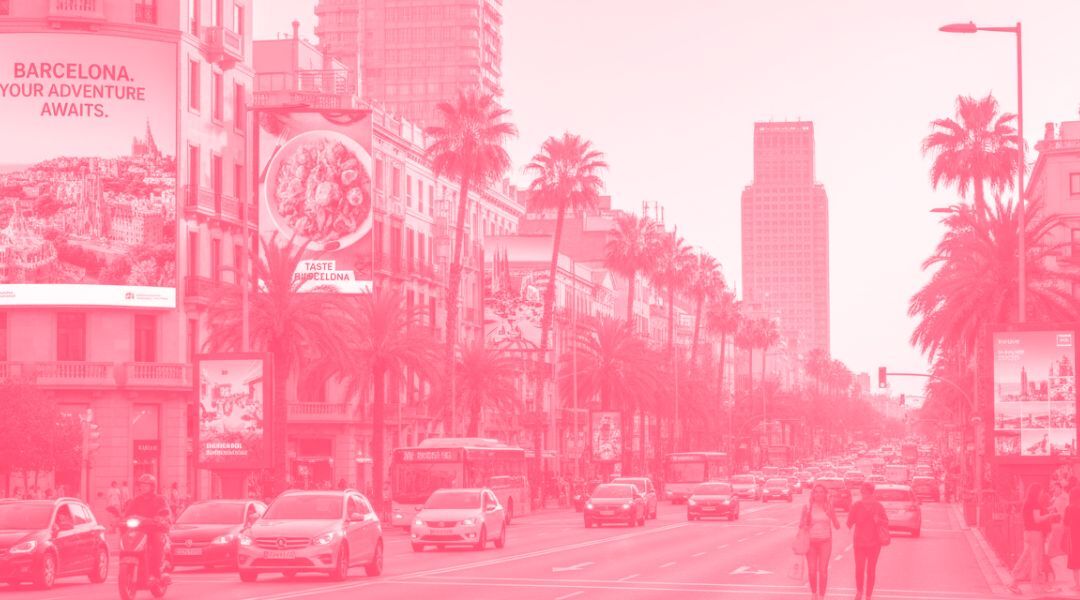
The digitalisation of inventory through DOOH (Digital Out Of Home) has enabled the shift from static impressions to dynamic environments, where content adapts in real time to variables such as location, time of day, or context.
This transformation has two key implications:
- It improves message relevance by aligning with user context
- It reduces perceived intrusiveness by integrating more naturally into the environment
In other words, DOOH transforms mass reach into contextual impact.
DOOH and omnichannel: connecting physical and digital
One of the most relevant aspects of Out-of-Home evolution is its integration within the digital ecosystem.
DOOH enables strategies that were, until recently, limited to online environments:
Audience-based activation
Programmatic buying has introduced a logic similar to digital media: locations are no longer purchased, audiences are.
This allows campaigns to be planned based on specific profiles, activating impressions only when the target is present in certain locations.
Mobile synchronisation
DOOH also acts as an entry point within omnichannel strategies.
For example, a user can be impacted in a physical environment and the communication can continue on their mobile device through digital campaigns, reinforcing recall and supporting the decision-making process.
This type of activation connects awareness generated in the street with conversion-driven actions.
The pillars of DOOH growth
The development of DOOH as a strategic channel is built on three key capabilities:
1. Creativity adapted to new consumption habits
Motion-based content (video, animation, 3D) aligns with current consumption patterns, dominated by platforms like TikTok, Instagram, or YouTube.
This allows learnings from digital environments to be applied to Out-of-Home, improving attention and recall.
2. Operational flexibility
Campaigns can be managed in real time, adapting messages, creatives, or activations based on performance or external variables.
This flexibility brings DOOH closer to the continuous optimisation standards of digital paid media.
3. Improved measurement
The integration of mobility and device data enables more accurate measurement models.
Today, it is possible to analyse exposure, estimate audiences, and in some cases link impressions to behaviours such as store visits or digital interactions.
This makes DOOH an increasingly measurable—and therefore actionable—channel.
The role of Out-of-Home in modern media strategies
In a context where:
- Digital advertising saturation is high
- Users have increasing control over the ads they see
- And attention is fragmented
Out-of-Home offers a key advantage: guaranteed visibility in high-traffic environments.
However, its real value lies not only in reach, but in its ability to integrate into full-funnel strategies.
DOOH does not replace other channels—it complements them:
- It strengthens awareness in early stages
- It amplifies digital campaigns
- And it helps drive actions closer to conversion
Conclusion: towards a new “prime time”
The growth of Out-of-Home is not a temporary trend, but a structural adaptation to new consumption habits.
“Prime time” is no longer a time slot or a single channel. It is a set of moments distributed throughout the day, where attention is activated in motion.
In this context, DOOH emerges as a key channel to connect with users in those moments, combining impact, context, and activation capabilities.
The opportunity is not in choosing between traditional or digital media, but in understanding how to combine them within a connected strategy.
And within that balance, Out-of-Home, powered by DOOH, is playing an increasingly relevant role.