Influencer marketing has been growing for years, yes. But it also carries a structural issue: it has never fully integrated into media strategies.
Too manual, hard to scale, and, honestly, difficult to measure accurately.
This is where YouTube Creator Partnerships comes in. And no, it is not just another feature that will go unnoticed. It is Google’s (quite serious) attempt to turn creator marketing into a channel as structured and optimizable as any paid media campaign.
TABLE OF CONTENTS
From one-off collaborations to scalable strategy
Until now, working with creators felt like assembling a puzzle without instructions:
You searched for profiles manually, negotiated outside platforms, launched the campaign, and then hoped it would work. And if you wanted to measure real impact… good luck.
With Creator Partnerships, this model fundamentally changes.
Now, YouTube centralises the entire process within its ecosystem—Google Ads, DV360 and YouTube Studio—and introduces artificial intelligence to connect data, decisions and activation in a single flow. The result: less friction and far greater scalability.
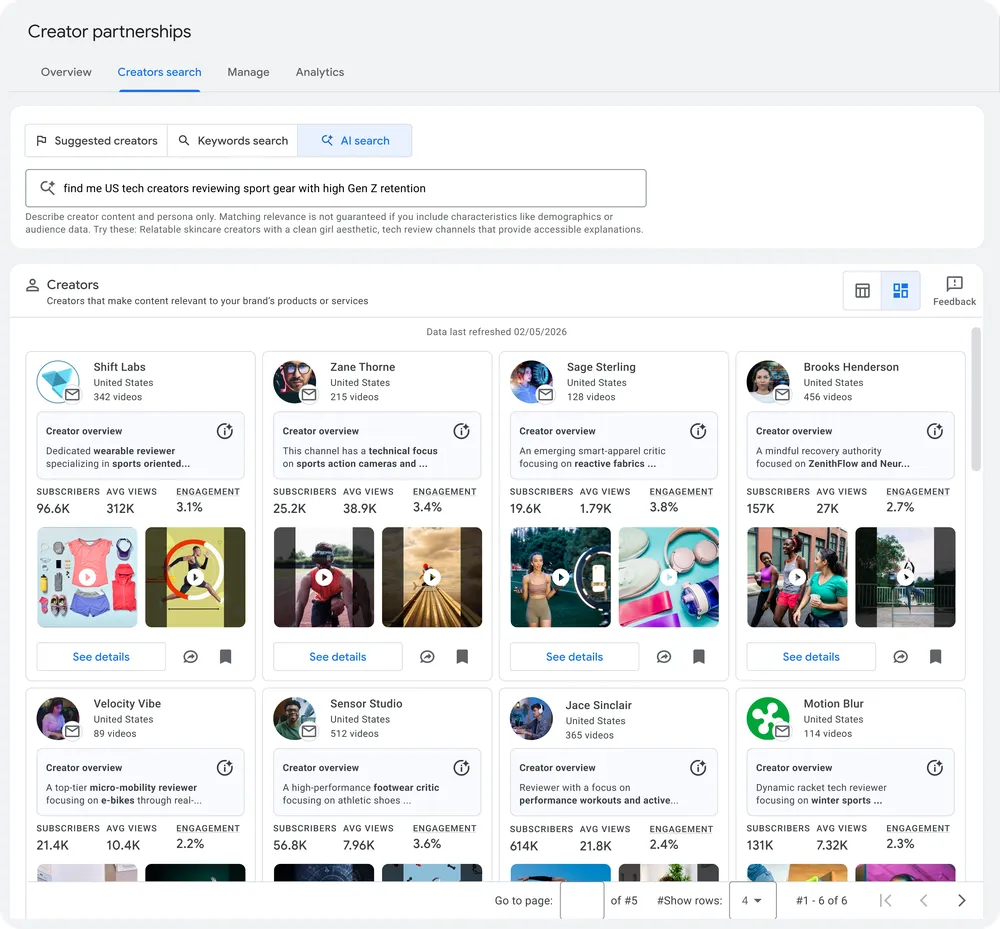
What is YouTube Creator Partnerships
It is a unified platform where brands and creators can collaborate directly, with one key difference: everything is designed to integrate with media buying.
This means you are no longer just managing collaborations—you can activate that content as ads, distribute it across formats, and measure its impact within the same environment.
And here comes the key ingredient: Gemini, Google’s AI, which analyses audiences, context and performance to recommend better decisions at every stage.
Key innovations (and why they actually matter)
Data-driven creator discovery
No more choosing creators “because they fit the brand”. The platform now analyses audiences, interests and real affinity to recommend creators with higher impact potential.
This reduces one of the biggest historical challenges: making creative decisions based on perception rather than data.
Creator content that scales like paid media
This is the real game changer.
Content no longer stays on the creator’s channel. It can now be turned into ads and distributed across formats like Shorts, In-stream or Demand Gen.
In practice, this means combining:
- authenticity (real, relatable content)
- with scalability (mass distribution and continuous optimisation)
And yes, this combination usually wins.
At Adsmurai, we see it constantly: when creative feels native, performance improves.
Full-funnel measurement (finally meaningful)
Measurement has always been one of the biggest challenges in influencer marketing. Lots of awareness, little clarity on real impact.
With Creator Partnerships, you can analyse results within Google’s ecosystem, connecting visibility with business outcomes.
This turns creator collaborations into what they are becoming: a measurable and optimisable channel, not a one-off action.
Full integration with the Google ecosystem
Planning, activation and reporting coexist in a single environment. No external tools, no fragmented processes.
This has a clear implication: creators move from tactical executions to a core part of the media mix.
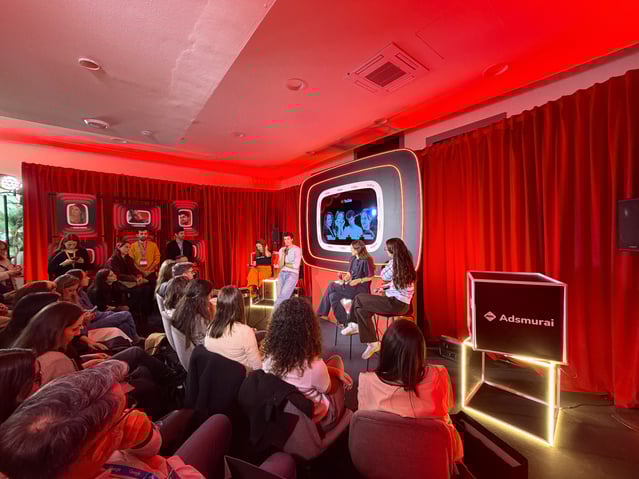
Why this is happening now
The context explains it well:
YouTube consumption on connected TV is growing, creator content is increasingly influential, and brands need efficiency more than ever.
Plus, YouTube already has millions of creators in its ecosystem, making this scalable from day one.
This is not a test. It is a structural shift.
What we are seeing in campaigns
When creator content is integrated into paid media strategies, behaviour changes.
For example, in retail campaigns, catalogue creatives are often outperformed by creator-led content showing products in real-life contexts.
The results are consistent:
- higher engagement
- better CTR
- and often stronger returns
The shift in mindset (that many still haven’t made)
Continuing to treat creator marketing as one-off actions is becoming outdated.
What we are seeing is a shift towards a model where creators act as:
- an acquisition channel
- a reusable creative asset
- and a source of optimisation
Conclusion: creator marketing is no longer optional
YouTube is not just improving a tool. It is redefining the role of creators in advertising.
More automation, more scalability and more measurement.
In short: less intuition, more strategy.
If you still treat creator content as separate from paid media, you are already behind.