In the digital ecosystem of 2026, influencer marketing has moved from being a creative bet driven more by intuition than data to becoming a data-driven discipline. Today, collaborating with creators is no longer about “trying and seeing what happens”, but about planning, measuring, and scaling with business logic.
If you’re a content creator or manage a brand, there’s one name you should have on your radar: Google’s Creator Partnerships Hub.
It’s no longer just about uploading a video and hoping for the best. We’re looking at a platform that connects YouTube’s talent with the analytical power of Google Ads, turning collaborations into real advertising assets. The question is clear: what exactly is changing, and why now?
TABLE OF CONTENTS
What is Creator Partnerships Hub?
Creator Partnerships Hub is basically the “command centre” where brands and content creators meet to do business. Depending on the platform we’re talking about (generally linked to ecosystems like YouTube, TikTok or Meta), its goal is to simplify the chaos of collaborations.
Here’s the most important thing you need to know:
What is it actually for?
- Talent discovery: Brands can filter creators by niche, reach, audience demographics and engagement rate. It’s no longer “let’s see who replies to my DM”, but a professional search.
- Campaign management: It allows you to send proposals, negotiate budgets and set delivery dates within a single interface.
- Transparent metrics: This is the crown jewel. Brands can see real stats (verified by the platform) instead of relying on screenshots that could be edited.
- Payment security: Many of these interfaces act as intermediaries to ensure the creator gets paid once they meet the brand’s requirements.
The most popular “Hubs” today
|
Platform |
Specific Name |
Main Focus |
|
TikTok |
TikTok Creator Marketplace (TTCM) |
Virality and fast-moving trends. |
|
YouTube |
YouTube Brand Connect |
Long-form content and high fidelity. |
|
Meta |
Instagram Creator Marketplace |
Visual aesthetics and direct purchases (Social Commerce). |
Why should you care?
If you’re a creator, being in these hubs puts you on the radar of big brands with serious budgets. It’s moving from being an “influencer” to becoming a “commercial partner”.
If you’re a brand or agency, it saves hours of manual research and reduces the risk of working with accounts that have fake followers.
Key point: Most of these hubs aren’t instantly open access; they usually require a minimum number of followers (for example, 10,000 on some platforms) and strict compliance with community guidelines.
If we talk specifically about Google, the Creator Partnerships Hub is a major evolution within its advertising ecosystem (Google Ads), designed so brands can leverage the power of YouTube creators in a technical and professional way.
Unlike a simple “directory”, this hub is integrated directly into the tools companies already use to manage their ads. Here’s how it works in 2026:
Where can you find Google Partnership Ads?
It’s not an external website; it’s a tab or section inside Google Ads (under Tools > Shared Library > Creator Partnerships). Its biggest value is that it lets you manage influencer marketing with the same precision as if you were buying keywords in Search.

Key features (Updated for 2026)
- Open Call: Brands publish a brief (a summary of what they need) and creators from the YouTube Partner Program can proactively apply by sending their video proposals.
- Organic mention detection: The hub uses AI to alert a brand: "Hey, this creator just uploaded a video where they speak positively about your product". The brand can contact them right there to request permission and turn that organic video into a paid ad.
- Swappable Slots: A game-changing feature where creators leave “slots” in their videos so Google can dynamically insert ads from different brands, allowing an older video to keep generating money with new sponsors.
- Unified metrics: You can see in a single dashboard how many views were organic (from the creator’s own channel) and how many came from the ad spend you put behind that video.
Google vs TikTok or Meta
What sets Google’s hub apart from TikTok or Instagram is the depth of data. While others focus on “fame”, Google focuses on conversion.
- YouTube BrandConnect: This is the programme that “feeds” the hub.
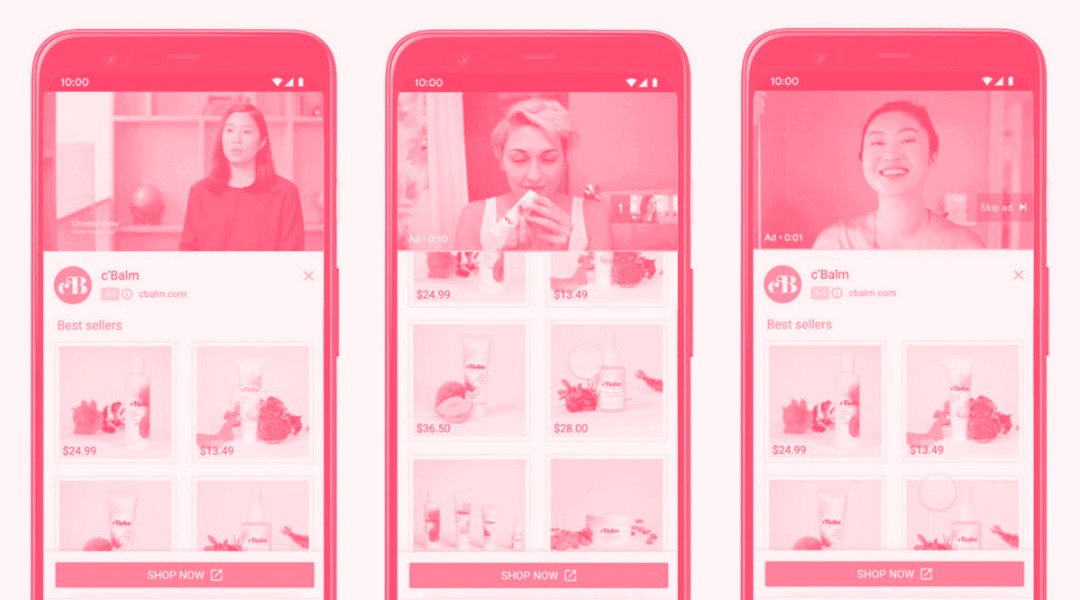
- Integration with Google Shopping: It allows buy buttons to appear while the user watches the creator’s video, linked to the brand’s inventory.
How do you join?
- If you’re a Creator: You must be part of the YouTube Partner Program and generally have a strong brand-safe profile (comply with community guidelines). In some countries, an invitation or a minimum number of subscribers is required (it used to be 10k, but Google has been lowering the barrier for Shorts).
- If you’re a Brand: You need an active Google Ads account. It’s ideal for companies already running video ads that want their assets to feel more “real” and less like traditional advertising.
In short: Google has turned influencer marketing into a science. It’s no longer about “paying a YouTuber and praying”, but about tracking every click and optimising the video like any other ad on the platform.
1. The rise of “Whitelisting” (or Partnership Ads)
This is arguably the most powerful tool in the Hub. It’s not just about the creator uploading a video to their channel.
- How it works: The creator grants technical permission to the brand through the Hub so the brand can “promote” the video from the creator’s account, using the brand’s budget.
- The advantage: The ad doesn’t appear as “Ad from Brand X”, but as “Content by [Creator Name] sponsored by Brand X”. This significantly increases CTR because the user feels they’re seeing a recommendation, not an interruption.
2. Integration with Google’s funnel
Unlike other social networks where content dies after a few days, Google’s Hub leverages the search ecosystem:
- Video retargeting: If someone watches a creator’s video about your product (managed via the Hub), you can set up Google Ads so that the same person sees a Search ad with a discount code when they look for something related the next day.
- Video SEO: The Hub helps identify which keywords the creators’ videos are ranking for, allowing brands to “own” specific search terms on YouTube through their partners.
3. Shorts and the 2026 algorithm
With Shorts fully consolidated, the Hub has introduced “Remix campaigns”:
- Brands can upload an audio track or challenge to the Hub.
- Participating creators receive automatic micropayments based on performance (views/shares) instead of a one-off upfront payment.
- This democratizes the Hub: you no longer need to be a creator with 1 million followers; if you’re a “micro-creator” with strong creativity, you can generate ongoing performance-based income.

Shorts, remix and the 2026 algorithm
With YouTube Shorts now consolidated, the Hub includes Remix campaigns:
- Brands upload an audio track or concept
- Creators participate
- Payments are performance-based, not fixed fees
This democratizes access: you don’t need millions of followers to generate impact if the content works.
A real example: how UOC activated Partnership Ads on YouTube
Everything we’ve covered so far creators, data, control from Google Ads, and content that doesn’t sound like an ad—is not theory. It’s already happening.
A good example is the work carried out with UOC (Universitat Oberta de Catalunya), where Partnership Ads on YouTube were used as a strategic lever to strengthen the consideration phase, not as a one-off visibility push.

Instead of relying on traditional institutional creatives, UOC activated creator content aligned with its academic positioning and amplified it through the Creator Partnerships Hub, keeping the message authentic while managing the investment via Google Ads.
The result was a much more natural and credible approach: the user didn't perceive an advertisement, but rather relevant content delivered by an authoritative external voice. This is precisely the logic behind why Google is investing in this model and why Partnership Ads work especially well in environments like YouTube.
This case illustrates how creator collaborations can be integrated into a structured media plan with control, measurement, and scalability, without sacrificing the essence of the content.
👉 If you want to delve deeper into how this strategy was implemented and the key lessons learned, you can consult the full case study.
Google has transformed creator marketing into a measurable and scalable discipline. It's no longer about "pay and pray," but about optimizing, learning, and making data-driven decisions.
For brands that want to grow seriously, this isn't a trend. It's a paradigm shift.