Every time Google announces a major change to Search, the industry goes back to the same headline: SEO is dead. Again. A tradition almost as old as algorithm updates themselves.
But this time, the debate deserves a bit more nuance.
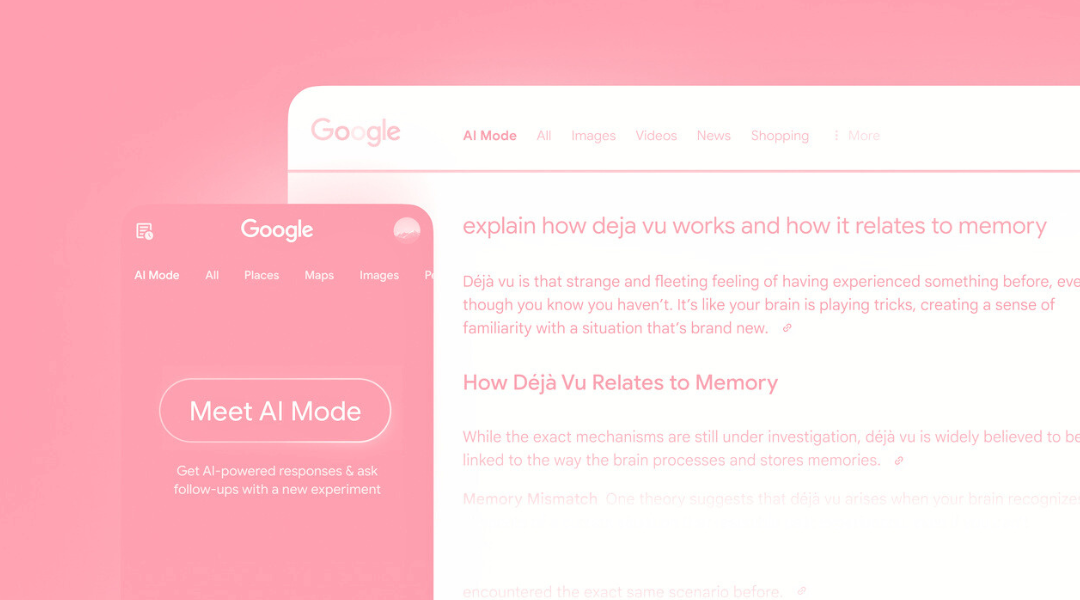
Google has not simply introduced a new AI feature. It has reinforced a clear strategic direction: turning Search into a more conversational, multimodal, personalised and action-oriented experience. In other words, less “type a keyword and choose a link” and more “explain what you need, add context, ask again and let AI help you move forward”.
Search is not disappearing. It is transforming. And that transformation has important implications for brands. Because if users start searching differently, brands also need to prepare to be found differently. Optimising content for a list of keywords is no longer enough. What matters now is also how a brand is understood, how its information is structured, how it appears in AI-generated answers and what role it plays in increasingly assisted decision-making processes.
So the big question is not whether SEO is still alive. The question is whether current SEO strategies are ready for an environment where Google no longer just shows results, but interprets, summarises, compares, recommends and guides the user.
What has changed in Google Search
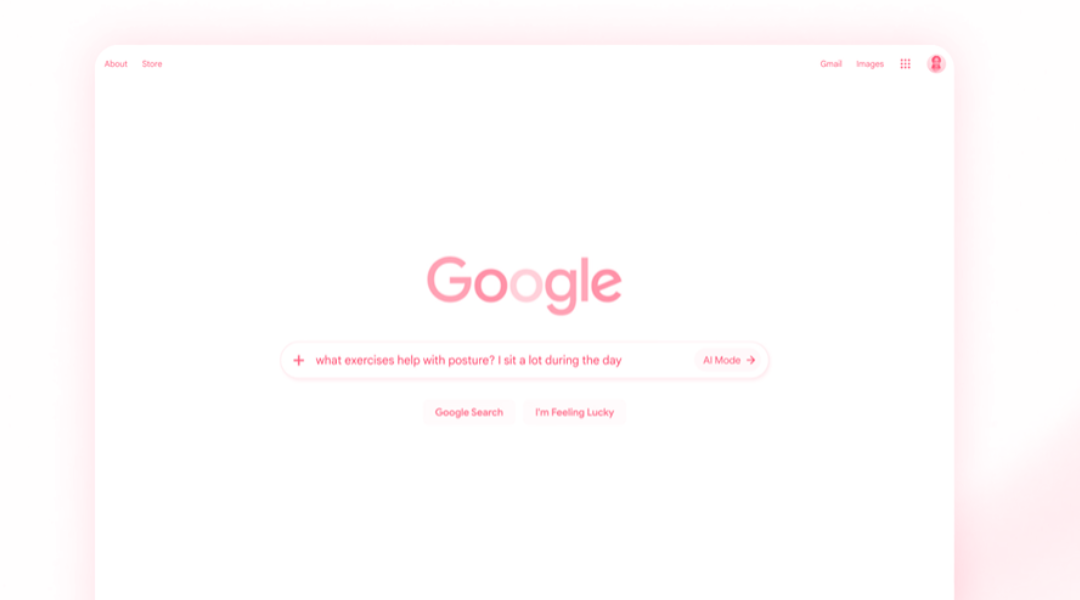
The most visible change is in the search bar itself. Google has announced one of the biggest Search updates in more than 25 years: a more dynamic search box that can expand as users type longer and more complex queries.
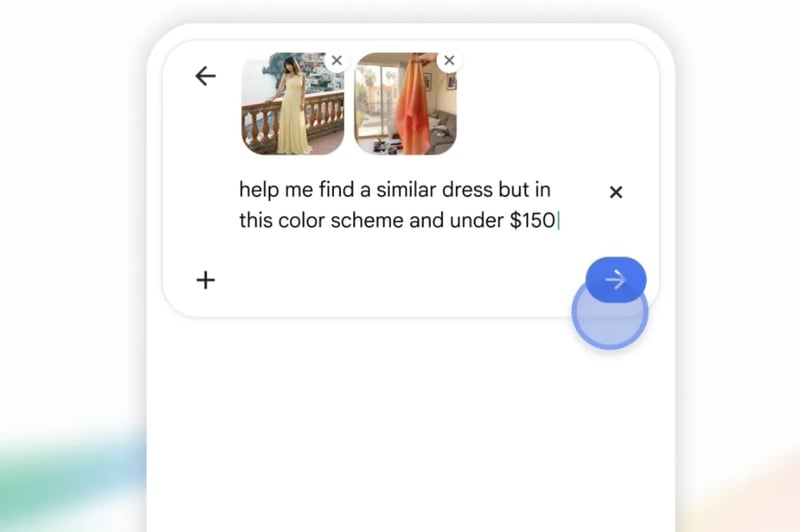
It will also allow users to add more context to their searches, combining text, images, files, videos or even open Chrome tabs. In addition, query suggestions will become less like traditional autocomplete and will instead rely on Gemini to help users better formulate what they need.
At first glance, this may look like an interface change. And partly, it is. But behind it, there is a pretty clear signal: Google wants users to stop searching as if they were talking to a database and start searching as if they were talking to an assistant.
This changes the logic of intent. A search no longer has to be short, ambiguous or fragmented. It can be long, contextual and much closer to a real need.
Searching for “best running shoes” is not the same as asking: “which running shoes are best for me if I’m just starting out, want something comfortable to train three times a week and don’t want to spend more than €120?”
Better for the user. For traditional exact-keyword SEO, well… slightly awkward moment.
AI Overviews connects with AI Mode
One of the most relevant points is the evolution of AI Overviews. Until now, these AI-generated answers were already changing the way Google resolved many informational searches, offering a synthesis before the traditional results.
The new development is that users will now be able to keep asking questions from that first answer and continue the experience in AI Mode, while maintaining the context of the initial search.
This matters because it reduces friction between a single search and a deeper conversation. Users can start with a simple question, receive an AI-generated answer and then explore further: compare options, ask for recommendations, refine criteria or resolve additional doubts without starting over.
For brands, this has a clear consequence: the search journey becomes less linear. It is no longer just about appearing in a specific SERP, but about being present in a conversational journey where AI can act as a filter, guide and intermediate point between the user and the web.
That said, there is an important nuance. Google has not announced that AI Mode will become the default mode for Search. And that changes the reading quite a bit.
Google is integrating conversational features into Search, but it is not completely replacing the current experience. At least, not for now. This means we are not facing a radical break in the search model, but a progressive evolution.
SEO is not being switched off. It is getting more complex. Which, frankly, was not exactly necessary, but here we are.
Generative interfaces and more interactive experiences arrive
Another relevant announcement has to do with new generative interfaces. Depending on the type of search, Google will be able to create more interactive experiences, personalised layouts or small interfaces designed to better respond to the user’s need.
This opens a new stage in which Google’s answer may stop being a list of links, or even an AI-generated text block, and become a more dynamic experience.
Think about searches related to planning, comparison, product selection, travel, housing, local services or complex decisions. In those cases, Google may start organising information in a more visual, useful and context-aware way.
For brands, this reinforces the importance of having well-structured data, clear content and understandable attributes. If Google is going to build experiences from information available on the web, the quality, consistency and structure of that information will become even more important.
Put another way: if your digital ecosystem is a mess, AI is not going to perform magic. Well, maybe dark magic.
Information agents: Google starts searching on behalf of the user
Google has also announced what it calls information agents, designed for complex searches that cannot be solved in a single query.
The idea is that users can give Google a set of requirements and let the system monitor information continuously. For example, finding an apartment with specific characteristics, locating a particular opportunity or receiving alerts when something appears that matches their criteria.
This type of functionality changes the relationship between user and search engine. It is no longer just about searching at a specific moment, but about delegating part of the discovery process.
For brands, this may have relevant implications in categories where decisions require time, comparison and follow-up: real estate, travel, automotive, education, financial services, retail or high-value products.
Visibility will no longer depend only on appearing when the user performs an active search, but also on being correctly represented when an AI system crawls, filters and selects options on their behalf.
Source: Google
Agentic experiences: from result to action
Google is also moving forward with agentic experiences. The term sounds quite futuristic, as if the search engine were about to organise your life while you stare into the distance holding a coffee. The reality, for now, is more concrete: booking a table, finding local services, scheduling an appointment or helping complete tasks within Google’s own environment.
But the move is important.
Search is getting closer to action. It does not just answer, it facilitates the next step. This may particularly change local and service-related searches, where the gap between researching and converting can become much smaller.
For businesses with a local presence, marketplaces, retailers or services with real-time availability, this reinforces the need to properly manage operational information: opening hours, locations, availability, prices, reviews, product listings, contact details and trust signals.
Because when AI helps people decide, details matter. A lot.
Personal Intelligence: answers with more personal context
Another key announcement is the expansion of Personal Intelligence. This feature allows Google to use information from apps such as Gmail, Photos or other tools within the ecosystem to provide more personalised answers.
This reinforces an important idea: Search is no longer just an entry point to the web. It is starting to work as an assistance layer connected to the user’s personal context.
Search becomes more private, more contextual and harder to predict from the outside. Two users may make a similar query and receive different answers depending on their history, preferences, files, emails or digital context.
For brands, this means that visibility strategies cannot depend solely on a standard SERP. They will need to think about brand presence, authority, data, content and signals distributed across multiple environments.
Search becomes personalised. Measurement gets more complicated. What a surprise, another dashboard.
What Google did not announce also matters
Beyond the new features, there is one important absence: Google did not announce that AI Mode will become the default mode for Search.
This point is key to interpreting the real impact of the announcements.
Google is integrating AI layers into Search, making the experience more conversational and creating new paths for users to go deeper without leaving its ecosystem. But it has not taken the step of fully replacing traditional Search with a chatbot-style interface.
And that means that, for now, the SEO roadmap does not change radically. It expands.
AI Overviews had already affected certain types of searches, especially informational ones. These new features may intensify that change, but they do not seem to suddenly alter the entire dynamic of organic traffic towards third-party websites.
The important thing is not to panic, but to understand where user behaviour is heading.
What all this means for SEO
SEO is not dying, but it does leave less room for weak strategies.
Simple, generic and informational searches will be increasingly likely to be resolved within Google itself. In contrast, brands that provide depth, trust, expertise, useful data and a clear experience will have more opportunities to remain relevant.
This forces SEO to evolve.
It is no longer just about optimising a page for a specific keyword. It is about building a digital ecosystem that Google, users and AI systems can easily understand.
That includes expert content, clear web architecture, structured data, complete product feeds, consistency across channels, brand authority, reputation signals and measurement of presence in generative environments.
In short: less SEO as a checklist and more SEO as growth infrastructure.
What brands should do now
For brands, the first step is to stop thinking about AI as an isolated threat to organic traffic. The change is broader: it affects how users discover, compare, validate and decide.
That is why the answer should not be “let’s create more articles around long-tail keywords”. The answer should be to review whether the brand’s digital ecosystem is ready to be understood by search engines, AI assistants and real users.
This means improving strategic content, reinforcing topical authority, structuring product information, optimising the web experience, connecting SEO with paid media and analysing new visibility metrics beyond the click.
At Adsmurai, we see this as part of a bigger evolution: marketing is no longer able to work through separate pieces and needs to become a connected system. Search, content, data, media, creativity and measurement need to work together to generate real growth.
Because if Search becomes more intelligent, brands need to become more intelligent too.
Conclusion: it is not the end of SEO, it is the end of comfortable SEO
Google AIO does not mean the death of SEO. But it does confirm the end of a stage in which producing content, optimising a few tags and waiting for traffic to arrive was enough.
Search is becoming more conversational, multimodal, personalised and action-oriented. Users will ask with more context, expect more complete answers and move forward in their decisions within experiences increasingly assisted by AI.
In this new scenario, brands are not only competing to appear in a position. They are competing to become part of the answer, the recommendation and the decision-making process.
The future of Search is not just about ranking well.
It is about being understood, considered and chosen.