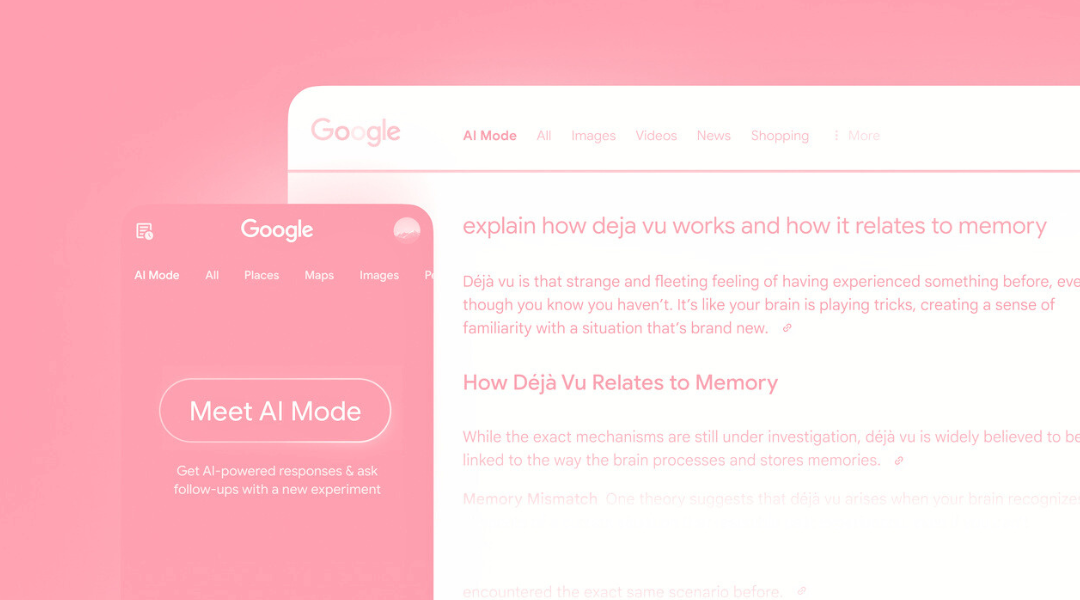
Online shopping is entering a new phase: decisions no longer depend only on what users see on a website, but on what AI understands, compares, and recommends. This is what we call agentic commerce: a model where AI agents assist (or partially automate) discovery, evaluation, and purchase.
In January 2026, Google accelerated this shift with an announcement that combines standardisation (protocols), new AI shopping surfaces (Search and Gemini), tools for retailers, and new offer-led formats.
The impact is immediate: if part of the purchase process moves into conversational experiences, brands compete less for “clicks” and more for eligibility, structured relevance, and frictionless conversion capability.
TABLE OF CONTENTS
What is Agentic Commerce
Agentic commerce is the evolution of eCommerce into an environment where an “agent” (AI) can:
- understand needs (conversational query),
- filter options,
- compare attributes,
- recommend products, and, in some cases, facilitate checkout or post-purchase management.
It’s not just “AI-powered search”. It’s AI-guided commerce, where recommendations are built from structured signals: catalogue, availability, pricing, terms, shipping, returns, and trust.
And here’s an important nuance: when users ask an AI, they rarely do it in keyword format (“running shoes”), but in context (“I want shoes for a 10K run, neutral, for asphalt, and that won’t destroy my budget”). To answer well, AI needs data (attributes) and rules (what’s relevant in that context). That’s the foundation of the shift.

Source: Google
What Google has announced about Agentic Commerce
Google has introduced several elements that, together, point to a new standard for AI-mediated purchasing.
1) Universal Commerce Protocol (UCP)
An open protocol so that AI agents and retailers’ systems “speak the same language” across the journey: discovery, purchase, and post-purchase. The aim is to reduce ad hoc integrations and allow the ecosystem to scale with less technical friction.
In practice, UCP aims to solve a classic problem: if every new “agent” requires a different integration with every retailer, the market fragments. With a standard, the goal is to make the connection between catalogue, commercial terms, and purchase capability more reusable and scalable.
2) Checkout within AI Mode (Search) and Gemini
Google outlines a more direct purchase flow within AI experiences (AI Mode and Gemini), supported by integrated payment methods. This can reduce the “jump” to the website in certain cases and therefore reconfigure the role of the website within the funnel.
The real implication isn’t “goodbye website”, but “goodbye to the website as the only place where conversion happens”. In low-friction journeys (quick purchases, replenishment, clear products), users can move a long way without leaving the conversational environment. And in complex journeys, AI becomes the layer that organises the decision.
3) Business Agent
A customer service/sales agent inside Search: users ask questions and the brand responds with helpful product and purchase information, managed from Merchant Center (subject to eligibility).
This is especially relevant because it introduces a new relationship layer: the brand doesn’t just “appear” via ads or product listings; it can interact (within limits and under Google’s framework) to resolve doubts, guide the user, and drive conversion.
4) A more “conversational” Merchant Center
Google introduces the need for richer attributes to answer conversational questions better: product FAQs, compatibility, accessories, substitutes, and similar signals. This makes the catalogue an even more strategic asset.
This is one of the major “turns” in the announcement: Merchant Center stops being just where you upload a feed for Shopping and becomes a product brain for AI. If AI Mode and Gemini answer complex questions, they will need:
- information that reduces uncertainty (FAQs),
- information that enables decision-making (compatibility),
- information that increases cart value (accessories/bundles),
- information that captures alternative demand (substitutes).
This isn’t a technical detail: it’s a shift in how visibility is built. In an agentic environment, the question is no longer “do you show up?” but “can the AI justify why you’re the best option?”.
5) Direct Offers (pilot)
An advertising pilot in AI Mode focused on exclusive offers when the system detects high purchase intent. In other words: the offer and value (discount, bundles, shipping, etc.) become even more integrated into the decision moment.
This shifts competition toward a more “retail” logic: you don’t win just by being present—you win by value proposition when the user is ready to buy. And in a conversational flow, that moment can be clearer (because the user is stating intent and conditions within the conversation itself).

Why it matters for eCommerce, retail, and brands
1) The funnel is reordered: from “click” to “decision”
The classic model (Search → Website → Conversion) doesn’t disappear, but it loses its monopoly. If part of evaluation and purchase happens on AI surfaces, the focus shifts to:
- less dependence on the click,
- more dependence on structured signals,
- and a new “recommendation layer” that decides what appears as the optimal option.
SEO implication: it’s no longer enough to “rank”; you need to be understandable and selectable by systems that answer on behalf of the user. And that is built with data (attributes), helpful content (FAQs), and experience (policies, shipping, returns).
2) The catalogue stops being operational: it becomes competitive advantage
In an agentic environment, the catalogue isn’t a repository—it’s a “decision engine”.
If your feed is incomplete, inconsistent, or poorly enriched, the problem isn’t just performance: it can be eligibility.
This is where at Adsmurai we often insist on a not-so-glamorous but very real point: catalogue governance (normalisation + business rules + consistent updates) is what enables scalable, sustained performance as the environment automates.
And this context makes it even clearer: if AI needs data to recommend, the difference between a “correct” catalogue and an “optimised” catalogue is no longer a 5% performance lift. It can be being in or out of the conversation.
3) A new high-value “inventory” is born: recommendation + offer
Direct Offers points to an important shift: monetisation moves closer to the decision point.
Instead of competing only for impressions or clicks, brands compete to:
- be the recommended option,
- with the right offer,
- at the exact moment.
This impacts retail media, SEM, pricing/promo strategy, and how you connect inventory with campaigns. In an ecosystem where AI can filter by availability, terms, and value, the offer stops being “something you activate in paid” and becomes a variable in the recommendation engine.
4) Measurement: more pressure on first-party and incrementality
If the journey is distributed across surfaces (and some are less “click-dependent”), last-touch attribution and simplistic models lose explanatory power.
What gains importance: first-party data and owned signals, server-side measurement where applicable, incremental tests, and approaches like MMM for strategic decisions (investment, channels, promos).
The key point: it’s not just measuring “conversions”, it’s understanding what is generating incremental demand versus what is capturing existing demand in a funnel where the click won’t always be the central unit.
Closing: what brands should prioritise from now on
Google’s announcement isn’t only an interface innovation; it’s a signal of where digital commerce is heading: more conversation, more automation, and more AI-mediated decisions.
To compete in that scenario, brands should prioritise three fundamentals:
- Governed and enriched catalogue: not as an operational task, but as growth infrastructure.
- Clear offer and terms: because value (price, shipping, bundles, returns) is increasingly integrated into the decision moment.
- Measurement ready for hybrid journeys: less reliance on the click and more focus on owned signals and incrementality.
The key question for 2026 is no longer “am I on Google?”. It is:
Are my catalogue, value proposition, and measurement ready for an environment where AI can choose first?
If the answer is “kind of”, good news: this isn’t magic. It’s systems. And systems can be built.