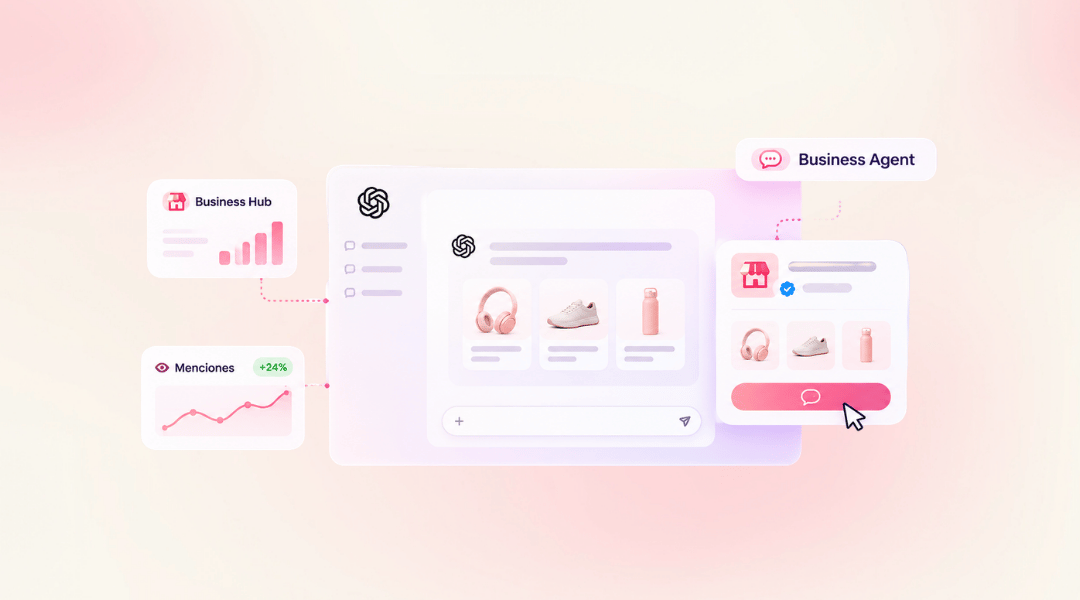
OpenAI has introduced Businesses in ChatGPT, a new initiative that enables companies to manage their information, understand how they appear in conversations, and connect directly with potential customers. Another step forward in the evolution of brand discovery through artificial intelligence.
For years, brands have worked to appear at the top of Google's search results and drive traffic to their websites. But the way consumers discover products and services is changing.
Today, users can ask ChatGPT directly which product to buy, which platform to use, or which company best meets their needs. Instead of browsing through multiple search results, they receive an answer that compares options and helps them make a decision.
As we explored in our article on how LLMs are transforming brand visibility, simply having an online presence is no longer enough. Companies also need to understand how artificial intelligence interprets and presents their brand.
Against this backdrop, OpenAI has announced Businesses in ChatGPT, an initiative introducing new tools for managing a company's presence within ChatGPT.
What is ChatGPT Businesses and how does it work?
Businesses in ChatGPT is an OpenAI initiative that gives verified companies greater control over their business information and insights into how users interact with their brand.
The initiative is built around two main features:
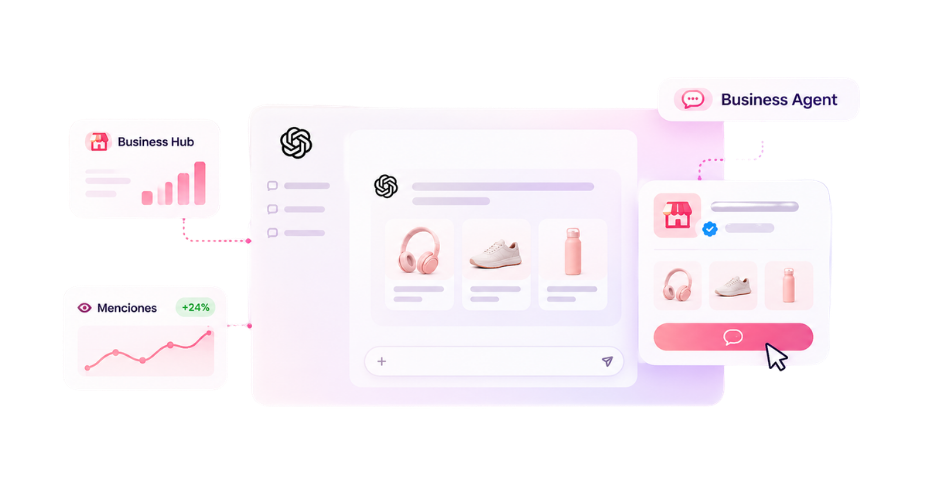
- Business Hub: a space where companies can claim and verify their profile, update information, and view statistics about their presence in ChatGPT.
- Business Agents: AI agents that allow users to speak directly with a company, ask questions, and explore its products or services.
With this launch, OpenAI is beginning to connect three key stages of the customer journey: discovery, consideration, and brand interaction.
Business Hub: managing and measuring brand visibility in ChatGPT
One of the main new features is the ability to claim a company profile through the ChatGPT Business Hub.
Until now, brands have largely relied on information published on their websites and other digital sources to influence how AI models interpret their business. Business Hub opens up new ways to manage that presence.
Up-to-date business information
Eligible companies can verify their profile and update relevant business information. They can also add product feeds containing details such as pricing and availability. This is particularly interesting for ecommerce businesses.
Imagine a user asking ChatGPT for wireless noise-cancelling headphones within a specific budget. Having structured, up-to-date product information can help the system present features and prices more accurately.
This reinforces the importance of optimized product catalogs, consistent data, and an infrastructure that keeps product information up to date across different channels.
New visibility metrics
Another new feature is access to aggregated statistics about a company's presence in ChatGPT.
The metrics announced by OpenAI include:
- Brand mentions: how frequently a company appears in recorded interactions.
- Website clicks: traffic generated from ChatGPT.
- Discovery topics: common themes in conversations where the company's website is cited.
These insights help answer increasingly relevant questions: In what contexts does our brand appear? Which customer needs are associated with our products? How is our AI visibility evolving?
This approach connects with solutions such as Adsmurai's GEO Tracker, which helps monitor mentions, analyze visibility against competitors, and identify positioning opportunities across different AI models.
Business Agents: from brand discovery to direct conversations
The second major new feature is Business Agents, AI agents that eligible companies can create to interact directly with users.
When a company appears in ChatGPT, users can view its profile and, if an agent is available, choose to start a conversation to learn more about what it offers.
For example, someone interested in booking a travel service could ask about differences between plans, clarify terms and conditions, or explore options tailored to their needs.
Instead of simply visiting a webpage, they could access the information through a conversational experience.
The opportunity lies in shortening the distance between discovery and purchase decisions, providing more contextualized answers during the consideration stage.
For now, Business Agents are available to selected ecommerce and online service companies in the United States. OpenAI is also exploring advertising options linked to these agents, kept separate from organic responses.
This evolution connects with the development of ChatGPT Ads, an emerging advertising environment where Adsmurai is already working to help brands incorporate conversational advertising into their marketing strategies.
What does ChatGPT Businesses mean for SEO and GEO?
The launch comes at a time when search strategies are evolving beyond traditional search engines.
SEO remains essential for building organic visibility, but AI systems are introducing new ways to discover, interpret, and present information.
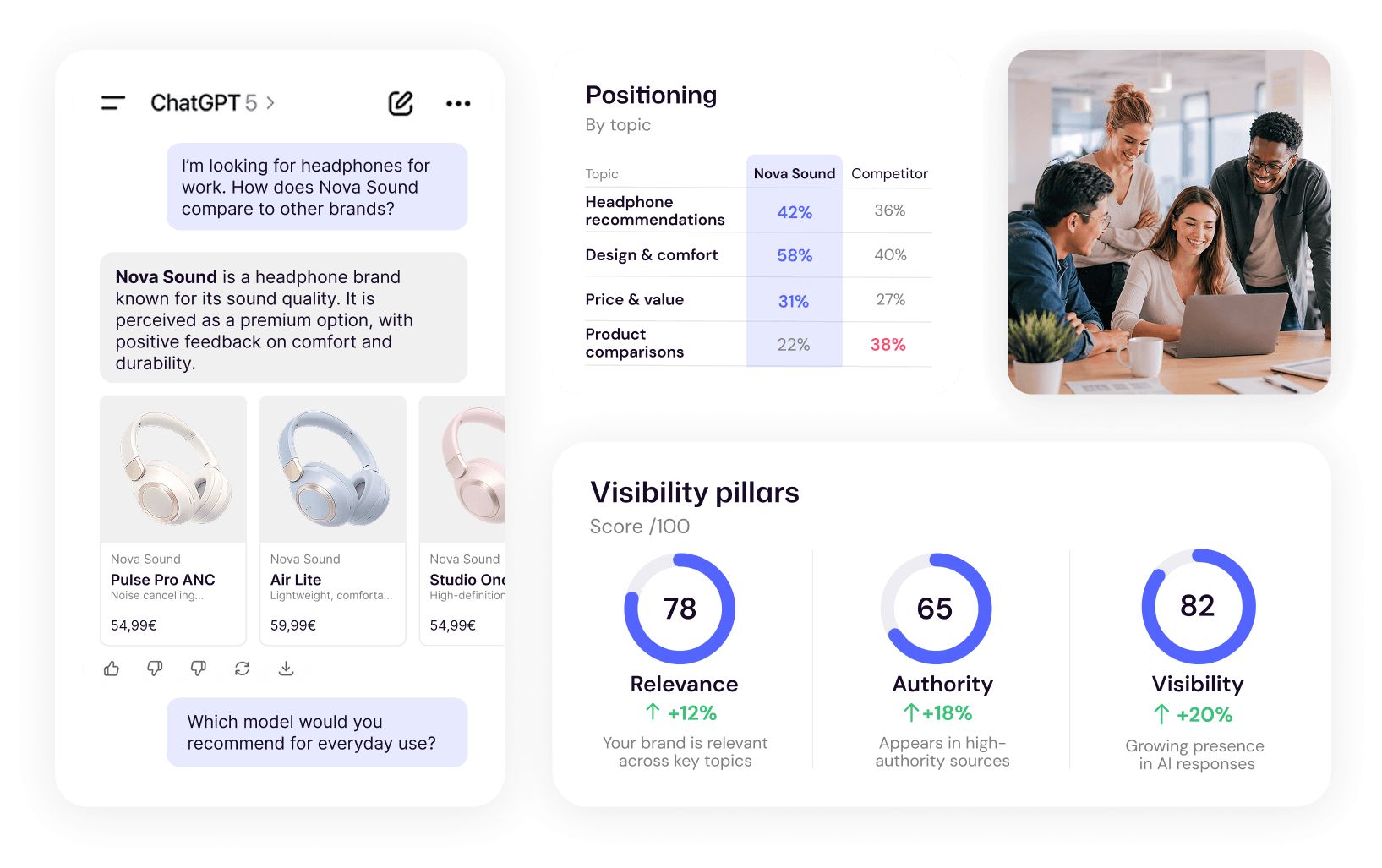
This is where GEO (Generative Engine Optimization) comes in: an approach focused on improving how brands appear and are represented in AI-generated answers.
ChatGPT Businesses reinforces three trends:
1. From ranking pages to building brand presence. It's no longer just about ranking for specific keywords. AI systems also need to understand what a company offers and in which contexts it is relevant.
2. From measuring traffic to analyzing visibility. Clicks still matter, but they do not capture the full influence a brand can have throughout the decision-making process. Mentions, the context in which a brand appears, and visibility relative to competitors are becoming more important.
3. From providing information to enabling decisions. Product data, content, and conversational experiences are becoming part of a connected discovery and consideration journey.
This evolution calls for an integrated SEO and GEO strategy, connecting visibility in traditional search engines with emerging generative AI environments.
That said, appearing in ChatGPT does not necessarily mean receiving a positive recommendation, and claiming a profile does not guarantee greater organic visibility.
How can brands prepare?
Although some features are still available only in certain markets, companies can start adapting their strategies now.
The first step is to audit their current visibility in ChatGPT, identifying which queries trigger mentions of their brand, how their products or services are described, and which competitors are more visible.
It is also essential to review the quality of corporate and commercial information, optimize product feeds, and keep content clear, relevant, and up to date.
Finally, brands should incorporate AI Visibility into marketing measurement, complementing traditional SEO metrics with analysis of mentions, competitive context, and discovery opportunities.
The next step: connecting AI visibility with growth
ChatGPT Businesses marks an important evolution: brands are beginning to gain tools that allow them to participate more actively in AI environments.
But the real opportunity goes beyond managing a profile or appearing in a conversation.
At Adsmurai, we believe AI visibility should be part of a connected growth strategy, where data, technology, content, and measurement work together.
Because the challenge is no longer just helping users find your brand. It's making sure your brand is among the relevant options when artificial intelligence helps them decide.
Discover how your brand appears in ChatGPT with GEO Tracker.