For over a decade, Pinterest has held a very clear position within the digital ecosystem: being the place where inspiration begins.
It is the platform where millions of people search for ideas to decorate their homes, plan a trip, organize a wedding or discover fashion trends. A place where visual content drives decisions.
But Pinterest wants to go much further.
The company has begun integrating Pinterest Assistant, a new artificial intelligence-based tool designed to transform the experience within the platform. Its goal is clear: to move from being a visual search engine to becoming an assistant capable of understanding preferences, interpreting context and recommending products in a personalized way.
This move is part of a much broader trend that is redefining digital commerce: the rise of AI Commerce.
TABLE OF CONTENTSFrom visual search engine to intelligent assistant
Until now, how Pinterest worked was quite simple.
Users entered a search, explored visual results and saved ideas to their boards to revisit later.
This model has worked very well because Pinterest has always been associated with visual discovery. Many purchase decisions begin precisely at that moment of inspiration.
However, Pinterest Assistant introduces a significant shift in this dynamic.
Instead of relying solely on traditional searches, users can interact with the platform in a much more natural way.
For example, instead of typing something like: “modern living room decor” they can formulate a more complex query: “I want ideas to decorate a small living room with a minimalist style and light colors”.
The assistant analyzes the request, interprets the context and delivers results tailored to the user’s style.
The experience shifts from a simple search to a conversation guided by artificial intelligence.
How Pinterest Assistant works
The technology powering Pinterest Assistant combines different artificial intelligence systems designed to understand both text and images.
These include:
- natural language processing
- visual image analysis
- behavior-based recommendation systems
- learning from user patterns
One of the most relevant elements is the so-called Taste Graph, a database Pinterest has been developing for years that connects millions of interests, visual styles and objects within the platform.
Thanks to this system, Pinterest can understand not only what users are searching for, but also what visual style defines their preferences.
The assistant takes into account signals such as:
- previously saved pins
- boards created by the user
- content interaction
- trends among users with similar tastes
All of this enables much more accurate recommendations than those based solely on keywords.
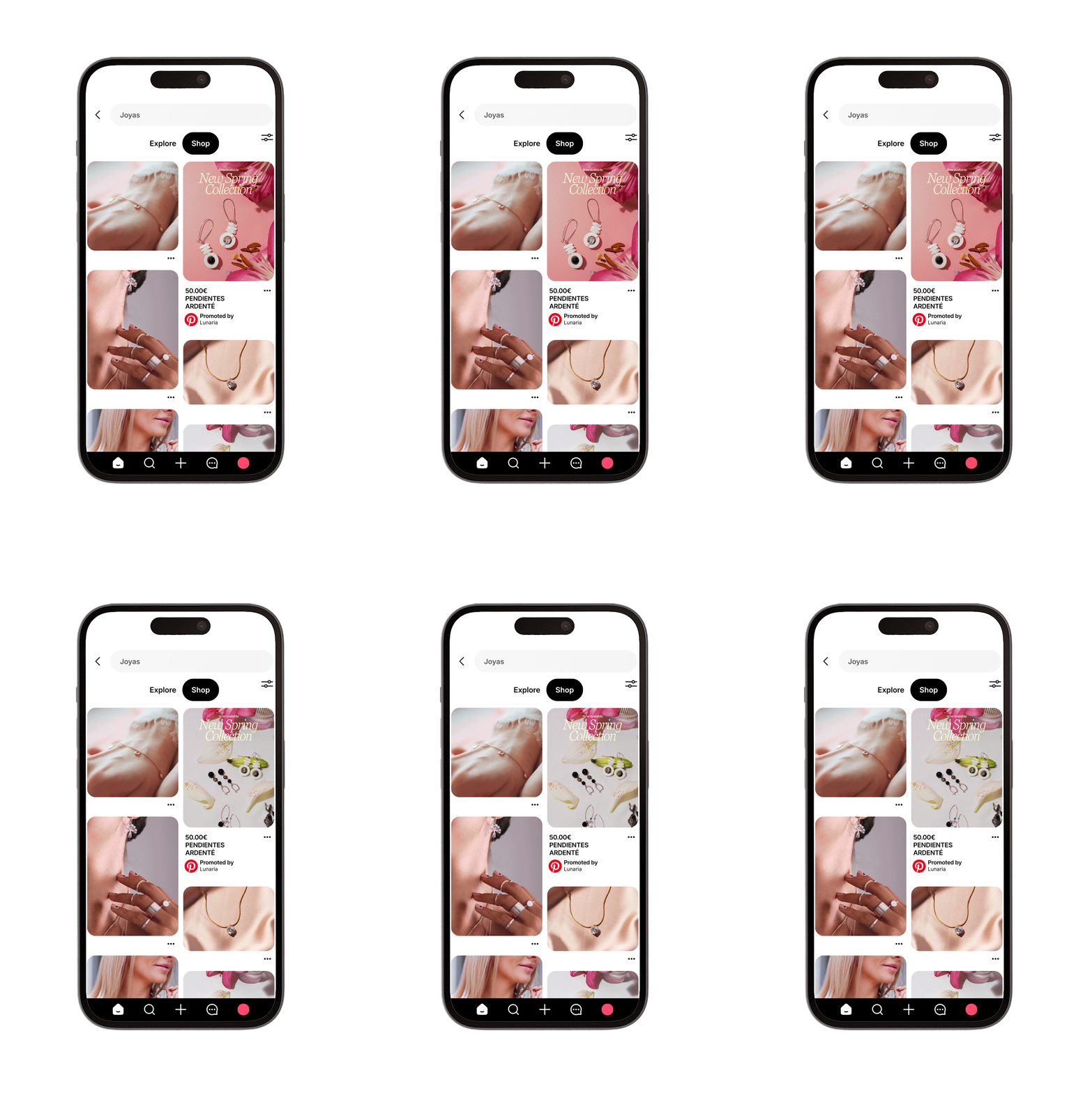
One of the most interesting aspects of Pinterest Assistant is its ability to connect inspiration and commerce within the same experience.
In just seconds, inspiration becomes product discovery.
This model is known as discovery commerce, a form of digital commerce where users discover products while exploring content.
The rise of AI Commerce
The emergence of tools like Pinterest Assistant reflects a much deeper transformation within ecommerce.
For years, digital commerce has been dominated by two major models.
The first was search engines. Google turned keywords into the main mechanism for finding products online.
The second model was marketplaces. Platforms like Amazon centralized product search within their own ecosystems.
Now a third layer is emerging: artificial intelligence assistants.
In this new model, users no longer need to manually browse hundreds of results. Artificial intelligence interprets intent and directly suggests the most relevant options.
This completely changes how products are discovered online.
How to leverage Pinterest Assistant through catalog strategy
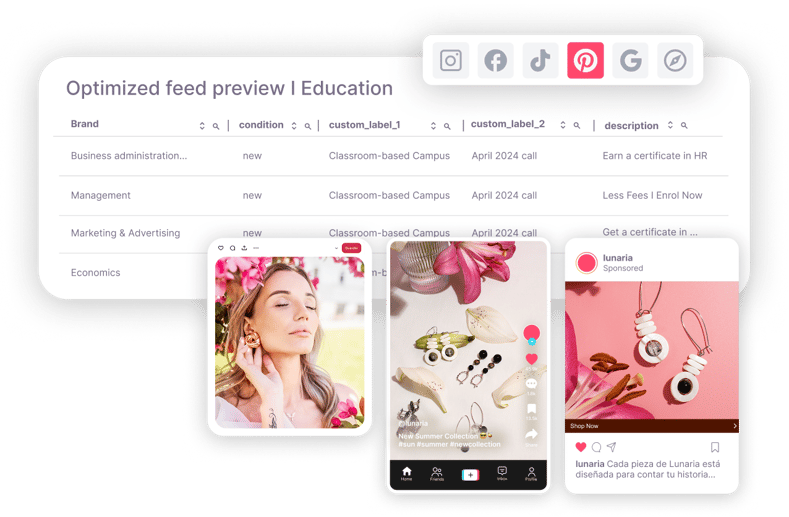
For brands selling products on Pinterest, this shift towards AI-driven discovery commerce makes catalog management even more strategic. Solutions like Adsmurai Feeds allow brands to optimize and structure product catalogs so platforms can correctly interpret key attributes such as categories, styles, materials or usage context.
This helps products better fit Pinterest’s recommendation systems and appear in AI-powered visual discovery experiences. Additionally, by automating feed updates and optimization, brands can scale their presence in Pinterest Ads catalog campaigns while maintaining consistency between product, creative and discovery context.
What it means for brands using Pinterest
The arrival of artificial intelligence assistants within discovery platforms creates new challenges for brands.
If AI decides which products appear in recommendations, visibility no longer depends solely on traditional search.
Brands will need to adapt their strategy across different areas.
Optimized visual content
Product images will become even more important.
AI systems analyze elements such as:
- visual style
- colors
- context
- product usage
The more contextualized the images are, the higher the chances of appearing in recommendations.
Structured product catalogs
Product attributes also gain greater importance.
Information such as materials, styles, categories or usage helps AI better understand how a product fits within a recommendation.
Discovery strategies
Brands must start thinking about marketing strategies designed for recommendation systems.
This means optimizing not only for search engines, but also for platforms that use artificial intelligence to suggest content and products.
Pinterest aims to lead AI-driven discovery commerce
With Pinterest Assistant, the platform takes a significant step toward a new AI-powered commerce model.
Inspiration remains the starting point.
But now it is combined with a layer of intelligence capable of understanding preferences, suggesting products and guiding purchase decisions.
If this evolution continues to accelerate, the ecommerce of the future will no longer look like a product catalog.
It will look more like a conversation with an artificial intelligence that understands exactly what we are looking for.
And Pinterest wants to be at the center of that conversation.